
The Ethiopian Coffee Ceremony (Buna): A Step-by-Step Guide to Ethiopia's Most Loved Ritual
BY: DA PUBLISHED: 2026-10-20 19:11:55 | UPDATED: 2026-10-20 22:53:10 | Views: 9
In Ethiopia, coffee is never just a drink. The coffee ceremony, known as buna, is a slow, fragrant ritual of roasting, grinding and brewing that brings families, neighbours and guests together, often three times a day. Here is everything you need to know about how it works, what each step means, and how to host one at home.
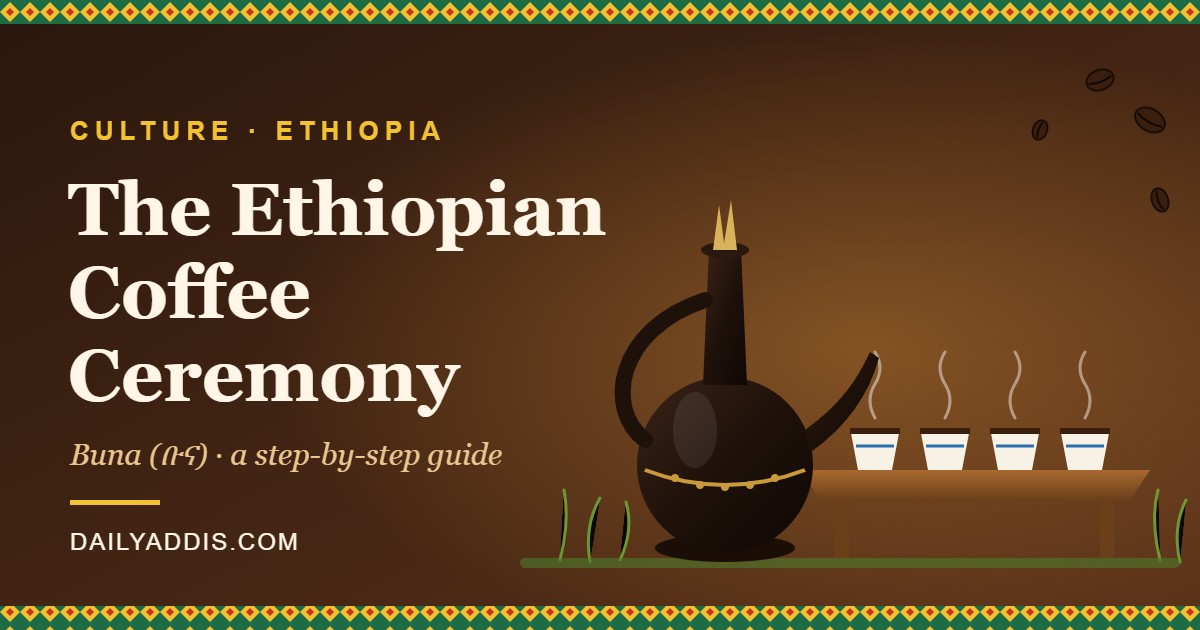
Ethiopia is widely celebrated as the birthplace of coffee, and nowhere is that heritage more alive than in the traditional coffee ceremony. Whether you are visiting Addis Ababa, invited into a family home in Gondar, or part of the diaspora keeping traditions alive abroad, being offered buna is a sign of respect and friendship. Turning it down is rarely an option — and once you experience it, you will not want to.
Below we walk through the history, the tools, each step of the ceremony and the etiquette, so you can understand it as a guest or proudly host one yourself.
1. Where It All Began: Coffee's Ethiopian Roots
The most famous legend tells of Kaldi, a goat herder from the Kaffa region in south-western Ethiopia, who noticed his goats became unusually energetic after eating red berries from a wild shrub. Whether or not the story is true, wild Coffea arabica grows naturally in Ethiopia's highland forests, and the country remains Africa's largest coffee producer today. Regions like Yirgacheffe, Sidama, Harar, Guji and Limu are known worldwide for their distinctive flavours.
For Ethiopians, though, coffee is first a social institution. The ceremony is where news is shared, disputes are settled, and friendships are made.
2. The Tools of the Ceremony
- Jebena – the round-bellied clay coffee pot with a long neck and spout. Its shape keeps the grounds settled at the bottom.
- Menkeshkesh – a flat iron pan used to roast the green beans over charcoal.
- Mukecha and zenezena – a wooden mortar and metal pestle for grinding the roasted beans by hand.
- Sini – small, handle-less porcelain cups.
- Rekebot – the wooden tray or low table on which the cups are arranged.
- Etan – frankincense, burned in a small clay burner to fill the room with fragrance.
- Fresh grass or flowers spread on the floor, a symbol of welcome and abundance.
3. The Ceremony, Step by Step
Step 1: Setting the scene
The host — traditionally a woman of the household, often dressed in a white cotton habesha kemis — arranges the rekebot, scatters fresh grass and lights the frankincense. The charcoal stove (mankeshesh or kesel burner) is prepared.
Step 2: Washing and roasting the beans
Green coffee beans are rinsed to remove husks and dust, then roasted in the pan over the charcoal. The host shakes the pan constantly so the beans roast evenly, until they turn dark brown and glossy and begin to crackle.
Step 3: Sharing the aroma
This is the moment everyone waits for. The host walks around the room with the smoking pan so each guest can waft the aroma toward themselves. Guests respond with compliments — it is part of the ritual to appreciate the smell before the coffee is even made.
Step 4: Grinding
The roasted beans are pounded in the mukecha into a fine powder. In modern homes a hand or electric grinder is common, but the rhythmic sound of the pestle is still loved in many households.
Step 5: Brewing in the jebena
Water is boiled in the jebena, the ground coffee is added, and the pot is returned to the heat until it boils again. It is then set to rest at an angle on a small ring so the grounds settle. Some hosts add a pinch of cardamom, cinnamon or cloves.
Step 6: Pouring
The host pours in one continuous stream from a height into the lined-up cups, without stopping between them — a skill that takes years to perfect and keeps the grounds in the pot. Coffee is served first to the eldest or most honoured guest.
4. Three Rounds: Abol, Tona and Bereka
A full ceremony includes three servings brewed from the same grounds, each weaker than the last:
- Abol – the first and strongest cup.
- Tona (also called huletegna) – the second round, milder.
- Bereka – the third cup, meaning "blessing." It is believed to bless the guests, so leaving before the third round is considered impolite.
The whole ceremony can take one to two hours, which is exactly the point — it is time set aside for people, not productivity.
5. What's Served Alongside
Coffee is usually accompanied by a light snack such as popcorn, kolo (roasted barley and chickpeas), dabo (bread) or peanuts. Many Ethiopians take their buna with sugar; in some regions, salt or a little butter is added instead. A sprig of tena adam (rue) is sometimes placed in the cup for its herbal aroma.
6. Etiquette Tips for Guests
- Accept the invitation — refusing buna can seem unfriendly.
- Compliment the aroma when the roasted beans are brought around.
- Stay for all three rounds if you can, especially the bereka.
- Expect conversation, not silence. The ceremony is a social occasion.
- Do not rush the host; the slow pace is part of the respect.
7. How to Host a Coffee Ceremony Abroad
For the Ethiopian diaspora, the ceremony is a beautiful way to share culture with friends and teach children their heritage. You can buy a jebena and green Ethiopian beans from Ethiopian shops or online. If charcoal is not practical, roast the beans in a heavy pan on the stove (open a window!), use an electric grinder, and brew on a gas or electric hob. Burn a little frankincense, set out popcorn, and invite your neighbours — the spirit of buna travels well.
Frequently Asked Questions
What is the Ethiopian coffee ceremony called?
It is commonly called buna (the Amharic word for coffee) or the coffee ceremony. "Buna tetu" means "come drink coffee."
How long does an Ethiopian coffee ceremony last?
Usually one to two hours, covering roasting, grinding, brewing and three rounds of coffee.
What are the three rounds of Ethiopian coffee?
Abol (first, strongest), tona (second) and bereka (third, the "blessing").
Why is frankincense burned during the ceremony?
Frankincense (etan) purifies and perfumes the space and adds to the welcoming, celebratory atmosphere.
The Ethiopian coffee ceremony is hospitality in its purest form: an invitation to slow down, share and connect. Next time someone says "buna tetu," pull up a stool and stay for the bereka.